home · Learning to <em>taste</em> a cake before you trust it
Tasting & evaluation
Evaluating an unknown cake — a 7-step protocol
Píng chá · 评茶
A friend hands you a 357g cake with no wrapper. The vendor's label says 'Yiwu 2008' but the price says otherwise. Here is the seven-step protocol I use before brewing a single gram.
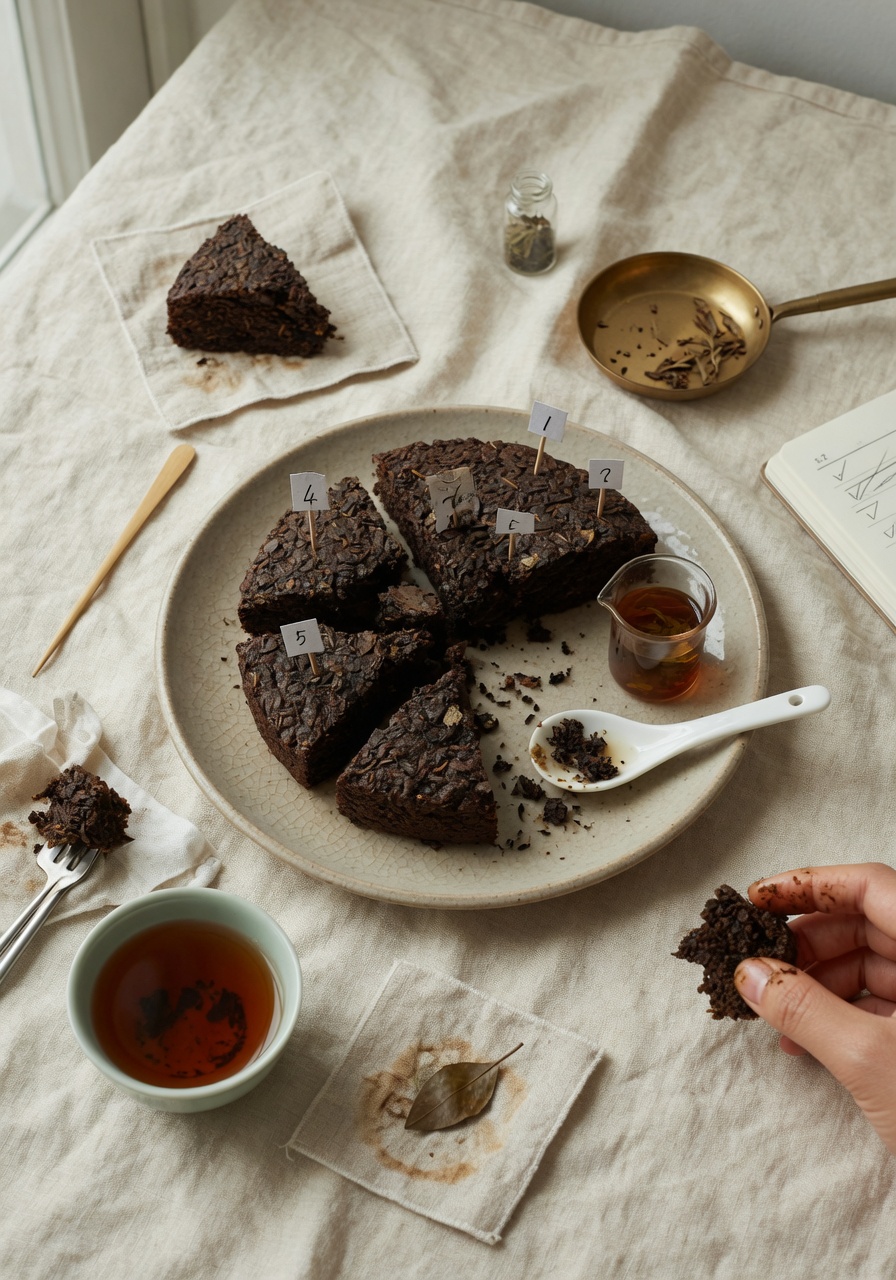
Most of the pu-erh I evaluate arrives without a story I can trust. A Mongolian trader brings a tong wrapped in newsprint from a Kunming warehouse; a Russian collector sends three loose cakes in a vacuum bag with a handwritten note that reads only ‘Bulang, maybe 2006’. The wrapper, when there is one, may have been swapped twice. The neifei — the small paper square pressed into the cake — may belong to a different factory entirely. In a category where a 2003 Yī Wǔ Zhèng Shān (易武正山) can trade for the price of a small car and a competent 2015 factory blend costs less than dinner, the gap between what something is and what it is sold as is the entire problem.
Over fifteen years of buying for clients in Ulaanbaatar, Irkutsk and Moscow, I have learned that brewing the tea first is almost always a mistake. By the time the leaves are wet, my nose has committed to a hypothesis and my notes start bending toward it. The protocol below — seven steps, roughly forty minutes before the first infusion — was assembled from habits I picked up watching wholesale buyers in Fangcun market in Guangzhou, from the GB/T 22111-2008 sensory grading procedure, and from a great deal of being wrong in expensive ways. It will not tell you what a cake is. It will tell you what it almost certainly is not, which in this market is usually the more valuable answer.
Step 1 — Read the cake before you touch the leaves
Set the cake on a clean sheet of white paper under daylight or a 5000K lamp. Do not pick it up yet. Look at the disc as a whole: is it a true 357g bǐng (饼), or one of the smaller 200g and 250g formats common in 2014-2018 boutique runs? Is the dome convex (stone-pressed, shí mó 石模) or perfectly flat with a sharp rim (hydraulic press, almost always factory)? A stone-pressed cake will show a small dimple on the underside where the cloth bag was knotted; a hydraulic cake will not. Measure the diameter — factory cakes from Menghai Tea Factory have hovered around 19-20 cm since the late 1990s, while Xiaguan iron cakes (tiě bǐng 铁饼) sit closer to 21 cm and weigh noticeably more for the same leaf volume. Note the color of the surface leaves. A genuine fifteen-year-old dry-stored sheng from Yunnan should read as dark olive to chestnut, with silver tips still visible where buds were used. If the entire surface is uniform dark brown without a single lighter bud, you are probably looking at either a heavily wet-stored cake or a shu that was pressed to imitate aged sheng — a common trick in 2007-2008 production. Photograph the cake from three angles before you do anything else; you will want the reference later.
Step 2 — The neifei, the neipiao, the wrapper
If the cake still has its paper, the wrapper is your first document and your first lie detector. Hold it against a window. Pre-2005 Menghai wrappers used a coarse, uneven cotton-pulp paper with visible plant fibers and a slightly yellowed tone; the printing was letterpress, which leaves a faint indentation you can feel with a fingernail. Post-2010 wrappers are smoother, whiter, and printed offset — no indentation. A ‘Menghai 7542’ wrapper that feels like modern printer paper and bears a 2003 date is, with very few exceptions, lying. The nèifēi (内飞) — the small square pressed face-up into the cake — should be partially embedded in the leaves, not glued on. If you can lift it cleanly with a fingernail, someone has replaced it. The nèipiào (内票), the larger loose ticket inside the wrapper, is the easiest element to fake and the least diagnostic; treat it as decoration. Cross-reference any factory code against published recipe sheets — the four-digit Menghai recipe system (7542, 7572, 8582) is well-documented, and the last digit always indicates the factory, not the year. A ‘7542’ attributed to Xiaguan is a contradiction.
Smell the paper, not the tea
Before unwrapping, press the paper to your nose. Dry-stored cakes have a faint woody, slightly sweet aroma that has migrated into the wrapper over years. Wet-stored cakes leave a damp basement smell on the paper that no amount of subsequent airing fully removes — a musty, almost mushroom note layered with something like wet cardboard. Shu that has been mislabeled as aged sheng often leaves a distinct fishy or ammonia trace on the wrapper from its wō duī (渥堆) pile fermentation. None of these aromas alone proves anything, but they constrain the hypothesis space before you have committed any leaf to the gaiwan.
Step 3 — Compression, color, leaf integrity
Now pick up the cake. Weigh it — a genuine 357g cake should weigh between 355 and 362g; anything under 350g has either lost significant moisture in very dry storage or was underweight from the factory, which is itself a marker of small or careless workshops. Press your thumb gently into the edge. A young sheng (under five years) pressed by stone should yield slightly and spring back. A 1990s cake will feel almost like cork — dry, firm, with leaves that separate cleanly along natural seams. An iron cake will resist your thumb entirely and require a pick driven straight down rather than levered. Examine a broken edge with a loupe if you have one. Look for: whole leaves versus chopped fragments (factory blends average 60-70% whole leaf for grades 5-7, higher for boutique productions); the presence of huángpiàn (黄片), the larger yellow mature leaves that signal either honest spring material or deliberate inclusion for sweetness; and stem ratio. A cake advertised as pure bud material that shows more than 10% stem is misrepresented. Color gradient matters — the outer 2 mm of the cake will always be slightly darker than the core because of oxygen exposure during storage, but the gradient should be smooth. A sharp boundary suggests the cake spent time in a humid room and was then surface-aired to disguise it.
Step 4 — Dry-leaf aroma, structured
Break off approximately 8-10g and place it in a warmed, empty porcelain gaiwan. Cover, count to fifteen, and lift the lid to your nose at a 45° angle. Do this three times with thirty seconds between, because the first impression is dominated by volatiles that dissipate quickly and the second and third readings tell you more about what the tea actually is. Catalog what you smell against three reference axes: sweet versus savory; fresh versus stored; clean versus defective. A clean young Yiwu will give honey, dried apricot, sometimes a high floral note. A clean young Bulang will give green herbs, camphor, a bitter edge that reads almost like dark chocolate. A 2005-2010 dry-stored cake should give woody, slightly medicinal notes with sweetness underneath — what the GB/T 22111-2008 standard calls chén xiāng (陈香), ‘aged aroma’. Defects to name explicitly: sourness (poor shā qīng 杀青, the kill-green step); smokiness when not expected (over-fired wok or contamination from drying fuel); fishiness or ammonia (incomplete fermentation in shu, or wet storage in sheng); mustiness (active mould). I keep a simple notebook column for each of these — present, trace, absent — because the words you do not commit to paper are the ones you forget by infusion six.
Step 5 — A diagnostic first brew
The first brew is not for pleasure. Use 5g in a 100ml porcelain gaiwan, water at full boil (95-98°C in mountain regions, sea-level boil otherwise), and a rinse of ten seconds followed by a thirty-second steep. Porcelain is non-negotiable for evaluation — yixing absorbs and forgives, and forgiveness is the enemy here. Pour the rinse over an empty cup and smell the cup once it cools; this is your clearest read on storage condition, because volatile defects concentrate in the rinse. The first real infusion should be observed for clarity, color and what Chinese tasters call tāng gǎn (汤感), the body or texture of the liquor. A young sheng should pour bright yellow-gold with high clarity; a fifteen-year dry-stored sheng should be deep amber, still clear; a wet-stored cake of any age will show cloudiness, sometimes a faint oily film. Shu should be opaque mahogany, never muddy. Taste a small sip and hold it. You are looking for three things on this first brew only: bitterness that converts to sweetness (huí gān 回甘) within thirty seconds, salivation under the tongue (shēng jīn 生津), and any defect that survives the rinse. Note these and move on. Pleasure-tasting begins at brew three.
What the first brew cannot tell you
Do not judge longevity, qì (气, the energetic effect), or aging potential from one infusion. These properties emerge across the full session — typically eight to twelve brews for a competent sheng — and a tea that opens slowly is often a tea that goes far. I have wrongly written off cakes that needed four brews to wake up. The first-brew diagnostic is a triage tool, not a verdict. If the protocol up to this point has revealed serious defects — active mould, ammonia, sour shā qīng — stop here and do not waste forty minutes on the full session. If it has not, proceed to the long evaluation as you would with any tea you respect.
Step 6 — The wet leaf as evidence
After the third or fourth infusion, lift the entire wet leaf bed onto a white plate. This is the single most informative step in the protocol and the one most often skipped. Spread the leaves and count: what percentage are whole? What percentage are torn at the stem rather than cut cleanly? Hand-picked, sun-dried material tears irregularly; mechanically processed material shows clean cuts. Look at the color of the spent leaves. A well-made young sheng yields a uniform olive-green to yellow-green wet leaf with intact, slightly leathery texture. Aged sheng leaves turn copper to dark brown but remain elastic — you should be able to fold a leaf without it crumbling. Brittle, brown-black leaves that fracture on touching indicate either very advanced age (rare, and the cake would be priced accordingly), wet storage damage, or — most commonly — that you are looking at shu pretending to be aged sheng. Shu wet leaves are always darker, more uniform in color, and lose elasticity entirely; they feel like wet newspaper. Sniff the wet leaf bed. Aged sheng should smell of damp forest floor, old wood, sometimes a hint of dried fruit. Wet-stored cakes smell of basement even after six rinses. Note also the presence of stems and huángpiàn in proportions that match — or contradict — what you observed in the dry cake.
Step 7 — Write the verdict in three lines
Before the cake leaves the table, write three sentences in your notebook. Line one: what this cake almost certainly is — region (or ‘unidentifiable blend’), approximate age bracket (under 5, 5-10, 10-20, over 20), processing category (sheng, shu, transitional). Line two: what this cake almost certainly is not — the negation is usually more reliable than the positive identification. Line three: a price you would pay per 100g, given current market conditions, if the seller’s story turned out to be entirely false. This last line is the discipline that protects you. If the seller is asking 2000 RMB and your blind-of-story valuation is 300, the gap is either an arbitrage opportunity or, more often, a warning. I keep these three-line verdicts in a single ledger across years — it is the most useful tea document I own, more useful than any tasting note, because reviewing it teaches me where my biases consistently inflate or deflate value. For deeper background on individual regions referenced in the verdict, the producer and region encyclopedias at puerh.app and the regional course at tea.school are where I send clients who want to calibrate further. The protocol is not a substitute for years of comparative tasting. It is what makes the years of comparative tasting accumulate into something you can actually use.
References
- GB/T 22111-2008 Geographical Indication Product — Pu'er Tea — Standardization Administration of the People's Republic of China
- GB/T 23776-2018 Methodology of Sensory Evaluation of Tea — Standardization Administration of the People's Republic of China
- Pu-erh Tea: Ancient Caravans and Urban Chic — Zhang Jinghong, University of Washington Press, 2014
- Identification of Pu-erh tea storage conditions by volatile compound analysis — Journal of Tea Science, Vol. 38 No. 4, 2018
Read next
Related articles
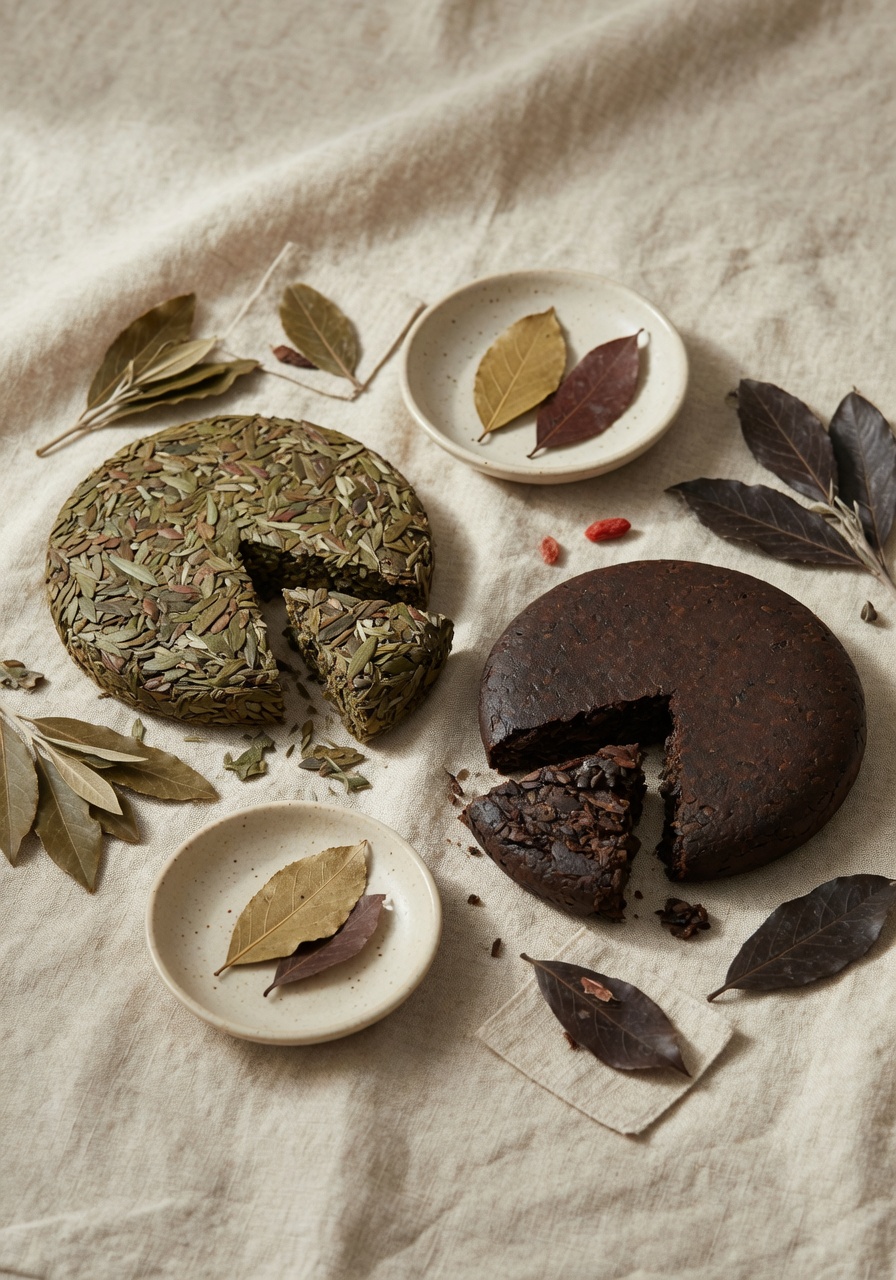
Sheng vs shu — what actually changes
Two teas share a name, a region, and a leaf — and almost nothing else. The 1973 invention of *wò duī* (渥堆) split pu'er into raw and ripe, and the chemistry of that split still defines every cake pressed today.
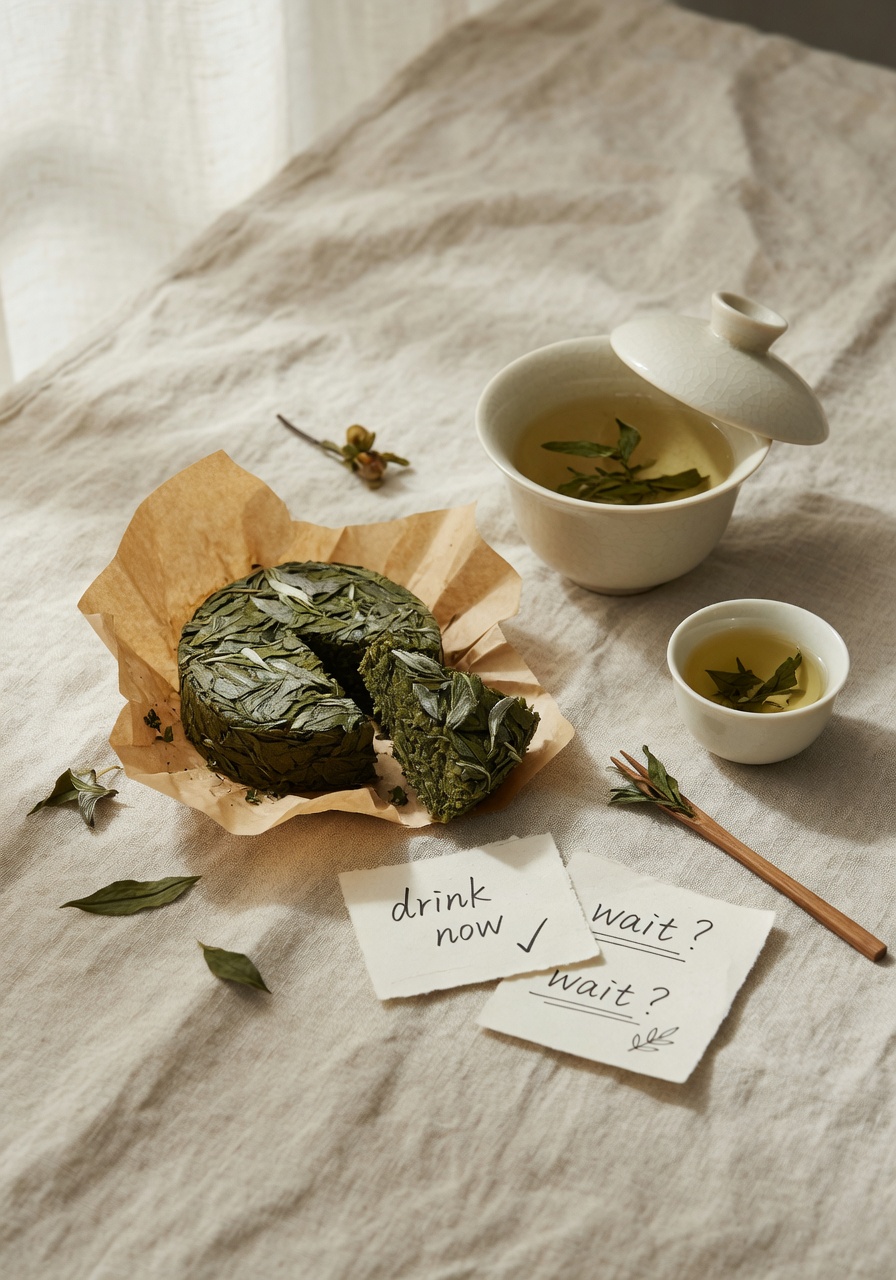
Young sheng — drink now or wait?
The question every collector asks within their first year. Some cakes are radiant at eighteen months; others need a decade before they stop biting. Here is how to tell which is which.
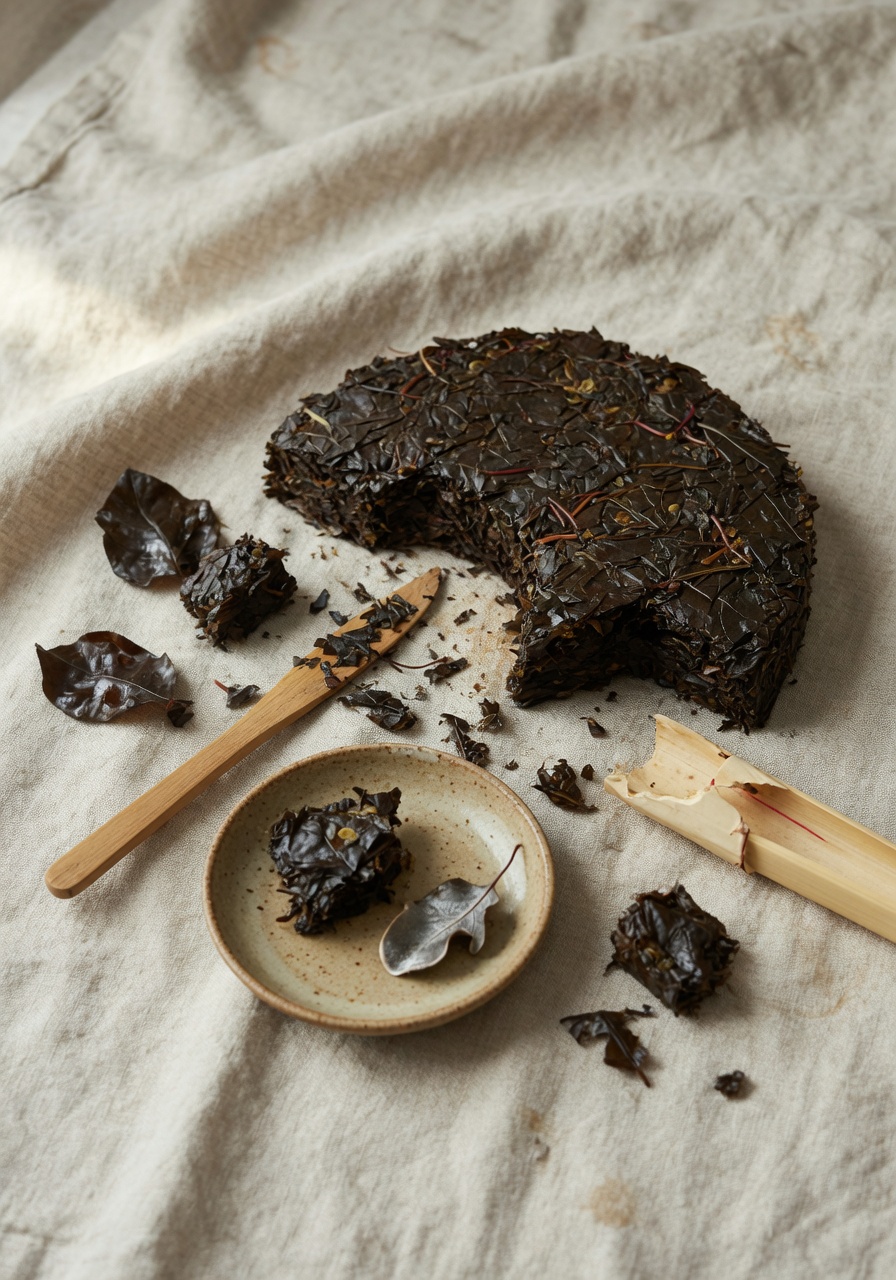
Menghai 7572 — the recipe that anchors the category
A four-digit code stamped on a paper wrapper has done more to define what shu tastes like than any single mountain or master. This is how 7572 became the reference point.
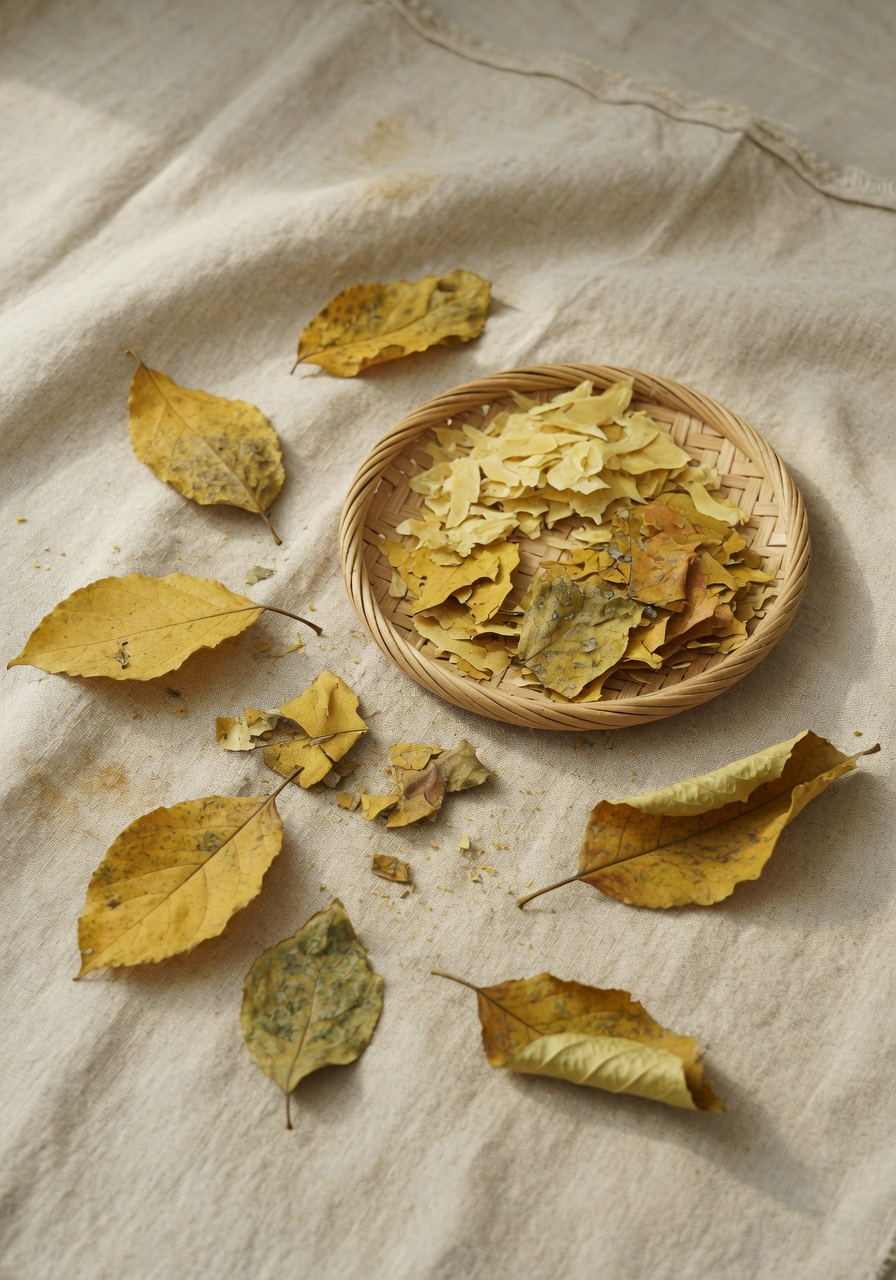
Huangpian — the yellow leaves nobody wanted
The oversized, pale leaves sorted out of premium sheng cakes were once treated as waste. A generation of drinkers has quietly turned that waste into one of the most honest cups in the pu'er catalogue.