home · Six centuries of <em>pu'er</em> — caravans, courts, and crashes
History & culture
The Tea Horse Road — how pu'er travelled before trucks
Chá Mǎ Gǔ Dào · 茶马古道
Before highways crossed the Hengduan mountains, pu'er moved on the backs of mules and Tibetan porters — a six-month journey that shaped the cake, the compression, and the taste we still chase.
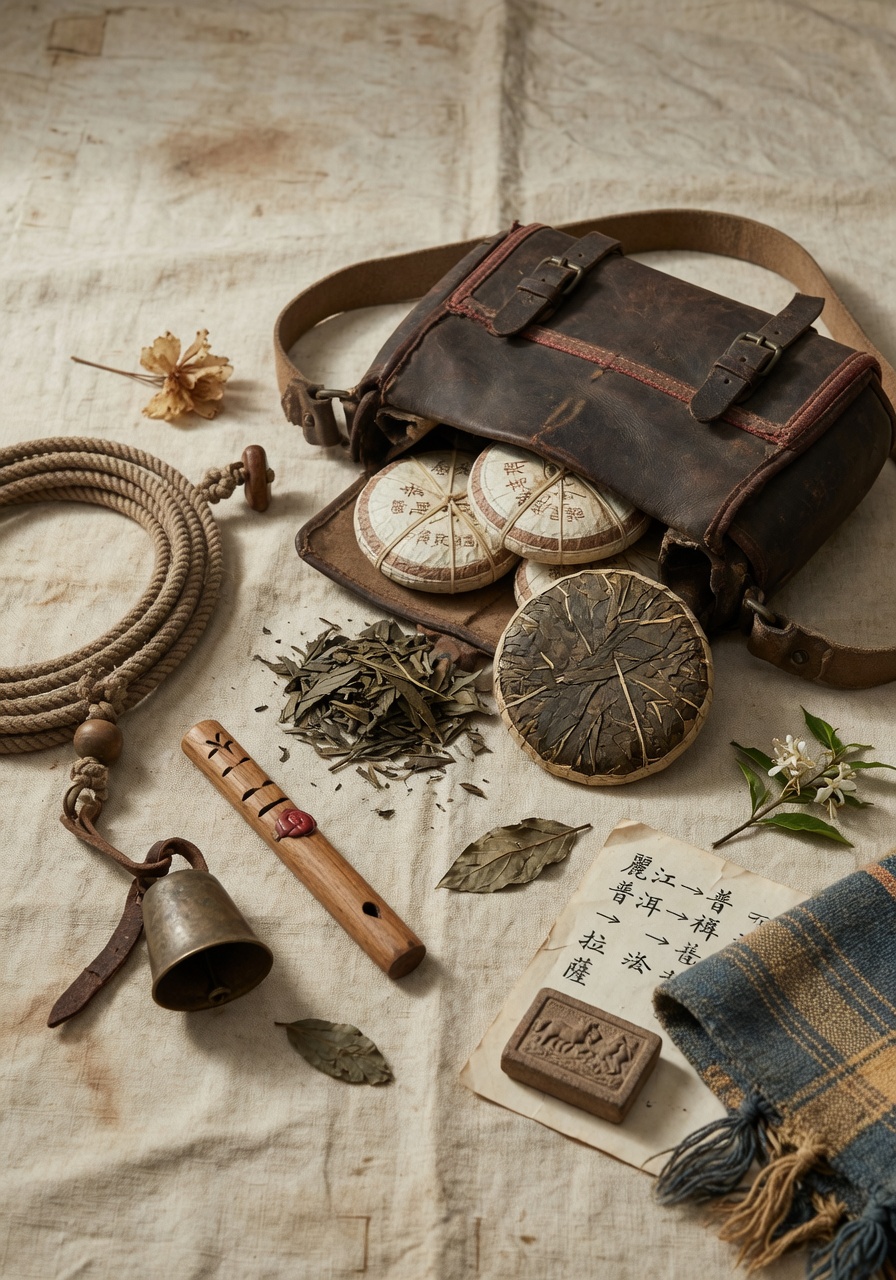
If you want to understand why pu’er is pressed into a 357-gram disc, why it can survive a decade of damp warehouse, why the Tibetan butter-tea bowl tastes of pine smoke and earth — start with the road. The Chá Mǎ Gǔ Dào (茶马古道), the Tea Horse Road, was never one road. It was a braided network of mule tracks, river crossings and high passes that carried Yunnan tea north into Sichuan and Tibet, and south into Burma, Laos and Vietnam, for roughly twelve centuries. The southern arteries ran from the six famous tea mountains around Yiwu and Menghai up through Simao (today’s Pu’er city), Dali, Lijiang and Zhongdian into Lhasa — a journey of around 2,400 kilometres that took a caravan four to six months in good weather, longer when the Lancang flooded or bandits held the gorges. Every constraint of that journey is encoded in the tea itself. The mao cha had to be steamed, pressed and dried so it would not mould in monsoon humidity but also would not crumble to dust by the time the mǎ bāng (马帮) reached the Tibetan plateau. It had to taste of something — anything — after six months of horse sweat, river fog and woodsmoke. The cake we open today is the descendant of a logistics problem. This article traces that road, the people who walked it, the goods that moved both ways, and the way the journey itself fermented the tea long before anyone in Menghai built a wō duī (渥堆) pile.
What the road actually was
The Tea Horse Road is a modern term — coined in 1990 by a six-man expedition from Yunnan University led by Mu Jihong and Chen Baoya, who walked a 100-day reconstruction of one branch and published their findings the following year. Before that, the network had no single name. Tibetans called the Lhasa-bound traffic the gyalam, the great road. Han records used utilitarian phrases — chá dào (tea route), yún nán dào (the Yunnan route), or simply named the staging towns. What Mu and Chen documented was not a paved highway but a system: at least three main trunks and dozens of feeder paths, varying in importance from the Tang dynasty onward. The southern trunk, the one most relevant to pu’er, ran from Xishuangbanna north through Simao, Dali, Lijiang, Shangri-La (then Zhongdian) and Markam into the Tibetan plateau, finally reaching Lhasa, with extensions to Shigatse, Gyantse and across the Himalaya into Bengal and Nepal. A second trunk left from Ya’an in Sichuan, carrying compressed biān chá (边茶, border tea) along a shorter but no less brutal route over the Erlang and Zheduo passes. A third, lesser-known southern branch carried tea down into mainland Southeast Asia — to Mengla, Luang Prabang, Chiang Mai — and explains why Lao and northern Thai tea cultures still recognise compressed Yunnan tea by sight.
Why horses, why tea
The trade had a specific economic logic, recorded in Song dynasty memorials from the eleventh century: the Chinese court needed war horses, and the Tibetan and Qiang highland peoples had them; the highlanders needed tea, which they could not grow at altitude, to balance a diet of barley, yak butter and dried meat. The Chá Mǎ Sī (茶马司), the Tea-Horse Agency, was formally established in 1074 under Emperor Shenzong to manage the exchange at fixed ratios — typically one horse for 60 to 120 jīn of tea, depending on the animal’s grade. By the Ming, the ratio had shifted heavily in the state’s favour, and tea-horse markets at Ya’an, Songpan and Lijiang were running thousands of transactions a year. The horses went east to the cavalry; the tea went west and north to monasteries and herding camps. Pu’er was never the only tea on the road — Ya’an’s zàng chá (藏茶) was equally important — but by the late Ming and through the Qing, Yunnan’s six tea mountains had become the prestige supplier for the Lhasa market.
The caravans — mǎ bāng and the people who walked
A mǎ bāng was not a romantic image; it was a small business with payroll, insurance and contracts. A typical Qing-era caravan from Yiwu to Lhasa ran 50 to 120 mules, with one gǎn mǎ rén (赶马人, muleteer) per six to eight animals, a guō tóu (锅头, cook-leader) who handled accounts and negotiations, armed guards on the more dangerous sections, and a lead mule wearing brass bells and a red forehead tassel — the tóu luó (头骡), whose pace set the column. Each mule carried two pressed-tea baskets balanced across a wooden saddle, typically 60 jīn per side, around 72 modern kilograms total per animal. The caravans were ethnically layered: Hui Muslim traders dominated the financing and the long-distance routes from Dali; Naxi and Bai handlers managed the middle sections through Lijiang; Tibetan and Khampa porters and yak-drivers took over above 3,000 metres where mules struggled. Few individuals walked the entire route. Tea changed hands, repacked and resold, at staging towns — Yiwu, Simao, Xiaguan, Lijiang, Shangri-La, Markam — and the price multiplied roughly tenfold from Xishuangbanna to Lhasa.
The shape of a Qing-era caravan year
Departures from Yiwu and Menghai concentrated in the dry season — November through February — when the spring tea had been processed, pressed and dried, and when the Lancang and Nu rivers were low enough to ford or cross by rope bridge. A caravan leaving Yiwu in late autumn would reach Dali in roughly 30 days, Lijiang in another 15, Shangri-La in 10 more, and from there faced the hardest stretch: the Lancang and Nu gorges, the 4,000-metre passes into Markam, and the final 1,200 kilometres across the Tibetan plateau to Lhasa. Arrivals in Lhasa clustered in late spring and early summer, in time for the religious calendar’s peak butter-tea consumption. Losses were significant — diaries from the Naxi muleteer Li Yaqing, partially translated in Yang Haichao’s 2007 study, record annual mule mortality of 8 to 15 percent and human mortality of 1 to 3 percent on the Tibet route, mostly from altitude pulmonary edema, falls and frostbite.
What came back
The road was not one-way. Caravans returning from Tibet carried wool, raw hides, musk, gold dust from the Drichu headwaters, dōng chóng xià cǎo (冬虫夏草, cordyceps), medicinal rhubarb, and — increasingly through the eighteenth and nineteenth centuries — Indian goods that had crossed the Himalaya: cotton cloth from Bengal, sugar, and, after 1850, increasing quantities of British manufactured items. Salt moved laterally between the Lancang salt wells at Yanjing and the tea villages. Silver flowed in both directions but ultimately accumulated in Yunnan, helping fund the rise of merchant houses like Tóngqìng Hào (同庆号), Sòngpìn Hào (宋聘号) and Chēshùn Hào (车顺号) — the lineage names that still appear on auction-grade antique cakes.
Why pu’er became pu’er — the road as fermenter
The single most important fact about the Tea Horse Road, from a tea-processing standpoint, is that it took half a year. Mao cha that left Yiwu in November as a green, astringent, faintly grassy material arrived in Lhasa in May or June as something else entirely — darker, mellower, with the rounded sweetness and earthy depth that Tibetan consumers expected and paid for. The caravans crossed every humidity and temperature regime the Hengduan range could produce: the wet, warm valleys of southern Yunnan; the dry, sunny Dali basin; the cold, oxygen-poor Tibetan plateau; the foggy gorges of the Lancang. Tea baskets were soaked in river crossings, baked in sun, frozen at altitude, fumigated nightly by woodsmoke from the porters’ fires. This was, in effect, an extreme and uncontrolled form of post-fermentation. The historian Yang Kaiti, in his 2004 monograph The Origins of Pu-erh Tea, argued that the characteristic taste profile of aged sheng — the dried fruit, the camphor, the chén xiāng (陈香) old-aroma — was discovered, not designed, as Yunnan merchants noticed that tea which had survived the road was preferred by Lhasa buyers over tea shipped by faster routes. By the late nineteenth century, Yunnan factories were deliberately storing finished cakes in damp warehouses for one to three years before sale, partially simulating the road. The 1973 invention of wō duī shou processing at Kunming and Menghai factories simulated it further, compressing six months of caravan transit into 45 to 60 days of pile fermentation. The connection is direct. Read more on that lineage in sheng vs shu — what actually changes and wo dui — the pile fermentation that defined shu.
The 357-gram cake and the seven-cake tǒng
Why 357 grams. The number is not arbitrary and not, as some marketing copy claims, mystical. It is a logistics fingerprint. Qing-dynasty regulations standardised export tea in units that could be inventoried at border posts: seven cakes wrapped in bamboo leaves formed one tǒng (筒), and twelve tǒng formed one jiàn (件) — the bamboo-and-rattan crate that fit a mule’s saddle pannier. Each tǒng was meant to weigh 2.5 kilograms of finished tea; divided by seven, that gives roughly 357 grams per cake. Twelve tǒng per jiàn gave 30 kilograms, two jiàn per mule gave 60 kilograms — close to the 60 jīn per side recorded in caravan manifests. The seven-cake format also had a tax-and-trade origin: the 1735 Qing imperial decree on Yunnan tea (the Yúnnán Chá Fǎ) fixed the standard at seven cakes per tǒng to simplify duty calculation at the Simao customs office. When the People’s Republic of China nationalised tea production in the 1950s and the China National Native Produce and Animal By-Products Import and Export Corporation began exporting Yunnan tea to Hong Kong, the 357-gram, seven-cake qī zǐ bǐng (七子饼) format was retained as a hard standard, codified in GB/T 22111-2008 Geographical Indication Product — Pu-erh Tea. Every Menghai 7572, every Xiaguan tuocha companion-cake, every boutique gushu pressing today still references that mule-saddle arithmetic.
Bamboo, smoke and the wrapper
The bamboo leaf wrapper — zhú ké (竹壳) — was not decoration. Fresh bamboo sheath repels insects, breathes enough to permit slow oxidation, absorbs incidental moisture, and lends a faint vegetal sweetness that becomes part of well-aged sheng’s aroma. The bamboo strip binding a tǒng was strong enough to hang from a saddle but flexible enough to absorb the shock of a falling mule. Tibetan consumers learned to read the wrapper: yellowing leaves and a tightening strip indicated proper aging; black mould or sour smell indicated water damage in transit. The smoke note that Western drinkers sometimes describe in older Xiaguan productions is partly a survival of caravan campfire exposure — Xiaguan factory, founded 1941 in the old caravan town of Xiaguan (modern Dali), retained a slightly smokier processing style well into the 1990s, and many drinkers consider it a deliberate echo of road-aged tea.
Decline, romance, and what remains
The road did not end suddenly. It was eroded over four decades. The Burma Road, built between 1937 and 1938 to supply Nationalist China against the Japanese, paved the first long stretch of motorable surface from Kunming toward Burma and cut weeks off the southern routes. The Yunnan–Tibet Highway, opened in stages between 1954 and 1958 under the new People’s Republic, reached Lhasa with trucks and effectively ended commercial mule caravans on the main trunk by the early 1960s. The Cultural Revolution suppressed the private merchant houses; the Menghai and Xiaguan state factories took over export production; and by 1976, the last documented commercial Yiwu-to-Lhasa caravan — led by the muleteer Ma Zhuyuan, born 1919, died 2009 — had completed its final run. What survives is partly physical: stretches of stone-paved trail near Shaxi, Tacheng and Markam, the hoof-worn grooves at Tiger Leaping Gorge, the caravanserai courtyards in Shaxi’s Sideng market square (UNESCO-listed 2001). Partly cultural: Naxi dōngbā manuscripts that record caravan prayers, Khampa songs that still name passes by their old toll-points. And partly commercial — every cake of pu’er sold today carries the road’s signature in its weight, its press, its wrapper and its taste. For anyone tracing how the journey shaped the modern category, the deeper producer histories at Menghai county — birthplace of modern shu and the regional profile of Yiwu — forest gardens of the Laos border are natural next reads, and tea.travel maintains route maps for those who want to walk surviving sections.
Reading the road in a modern cake
Pick up a 357-gram seven-cake qī zǐ bǐng from a 2008 Menghai pressing. The disc is firm but not brick-hard — compressed enough to survive a saddle but loose enough to be broken apart with a chá zhēn (茶针) and rehydrated in a yak-butter bowl. The wrapper is mulberry or cotton paper, replacing bamboo but echoing it. The neifei (内飞), the small paper label embedded in the cake, names the factory, the recipe number and the year — direct descendants of the Qing-era nèi piào (内票) batch tickets that let Simao customs verify origin. Brew it in porcelain or in a gài wǎn (盖碗), and the first three steepings will deliver the bitter brightness of young Menghai material; by the sixth or seventh steeping, after the leaves have fully opened, you will start to taste the road — the slight earthy sweetness, the camphor-and-dried-fruit depth that the original Lhasa buyers paid for. The road is gone. The taste it selected for is still the standard by which every cake is judged. That is the most durable legacy of the Chá Mǎ Gǔ Dào: not the trails or the towns or the merchant houses, but a sensory expectation, fixed in the palates of millions of drinkers, that pu’er should taste of time and distance even when it has travelled neither.
References
- GB/T 22111-2008 — Geographical Indication Product: Pu-erh Tea — Standardization Administration of the People's Republic of China
- The Ancient Tea Horse Road: A Field Study of the Trade Routes Between Yunnan and Tibet (1991) — Mu Jihong & Chen Baoya, Yunnan University Press
- The Origins of Pu-erh Tea (2004) — Yang Kaiti, Yunnan People's Publishing House
- Caravans of the Himalaya: A Diary of the Naxi Muleteers, 1934–1958 — Yang Haichao (ed.), 2007, translated excerpts in Journal of Asian Trade History
- Song Huiyao Jigao — Tea-Horse Agency memorials, juan 30 — Compiled Song dynasty institutional records, Zhonghua Shuju 1957 edition
- Tea Horse Road interview series — Ma Zhuyuan, last commercial muleteer, recorded 2003 — Yunnan Provincial Museum oral history archive
Read next
Related articles
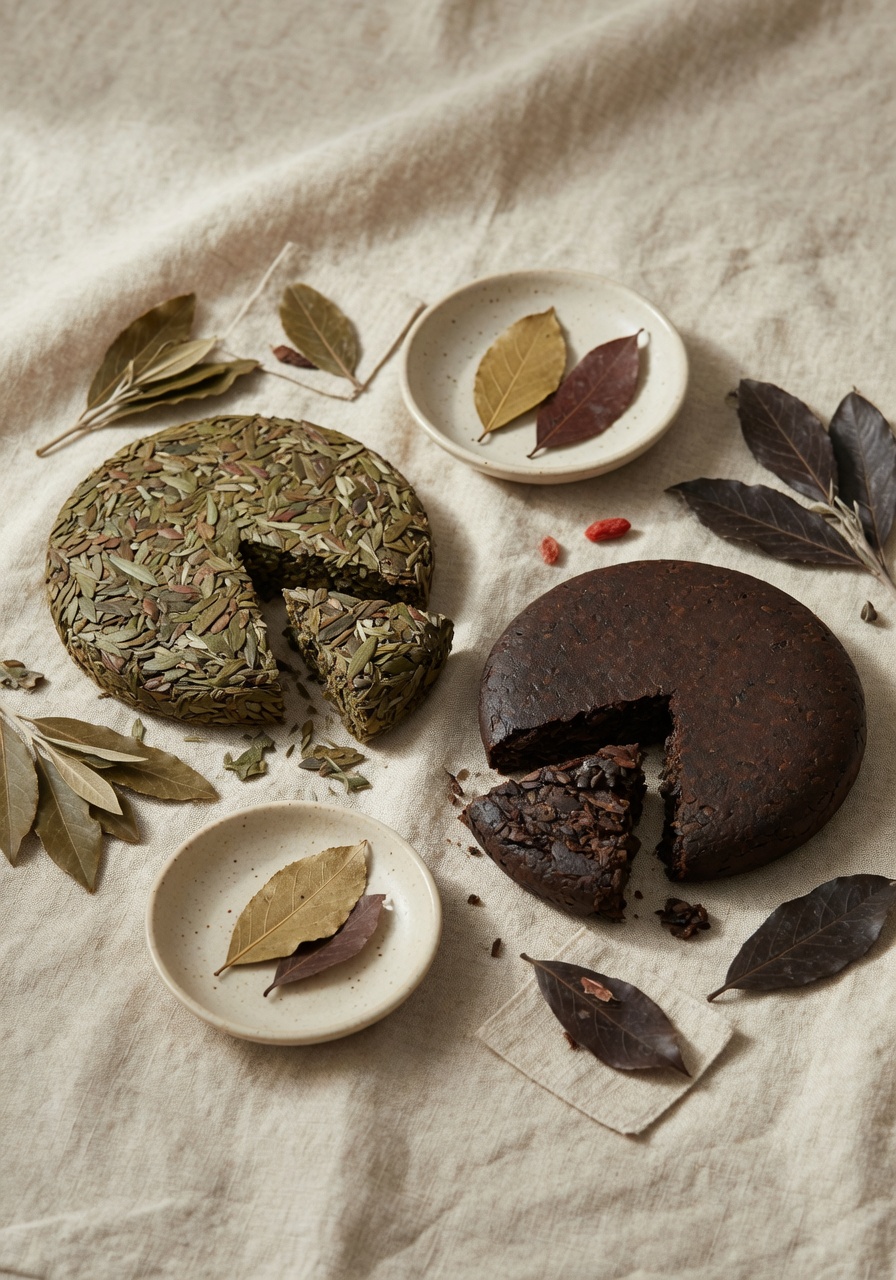
Sheng vs shu — what actually changes
Two teas share a name, a region, and a leaf — and almost nothing else. The 1973 invention of *wò duī* (渥堆) split pu'er into raw and ripe, and the chemistry of that split still defines every cake pressed today.
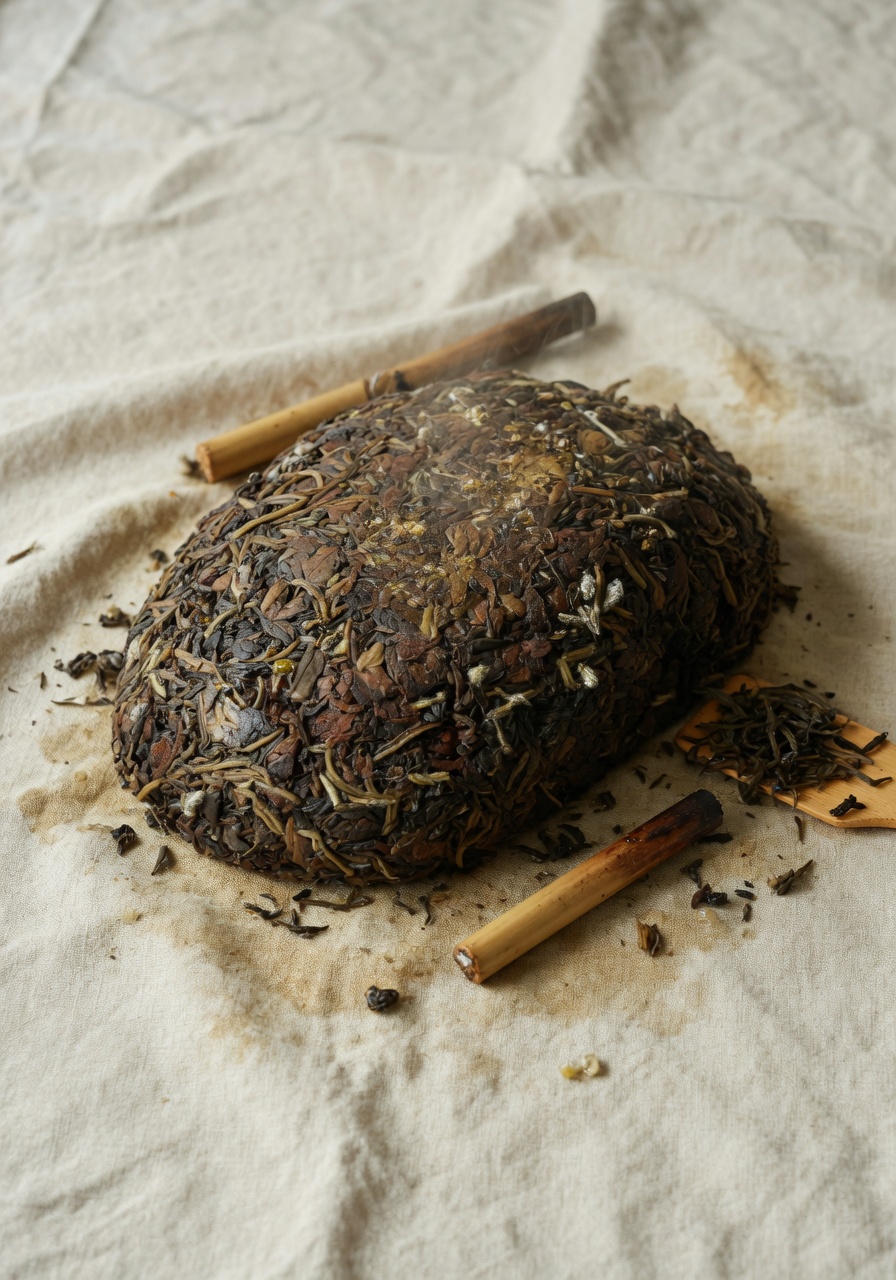
Wo dui — the pile fermentation that defined shu
In 1973, a team at Kunming Tea Factory wet-piled maocha under wool blankets and waited. Forty-five days later, the leaves were black, sweet, and unmistakably new. This is the story of how a chemical accident became a category.
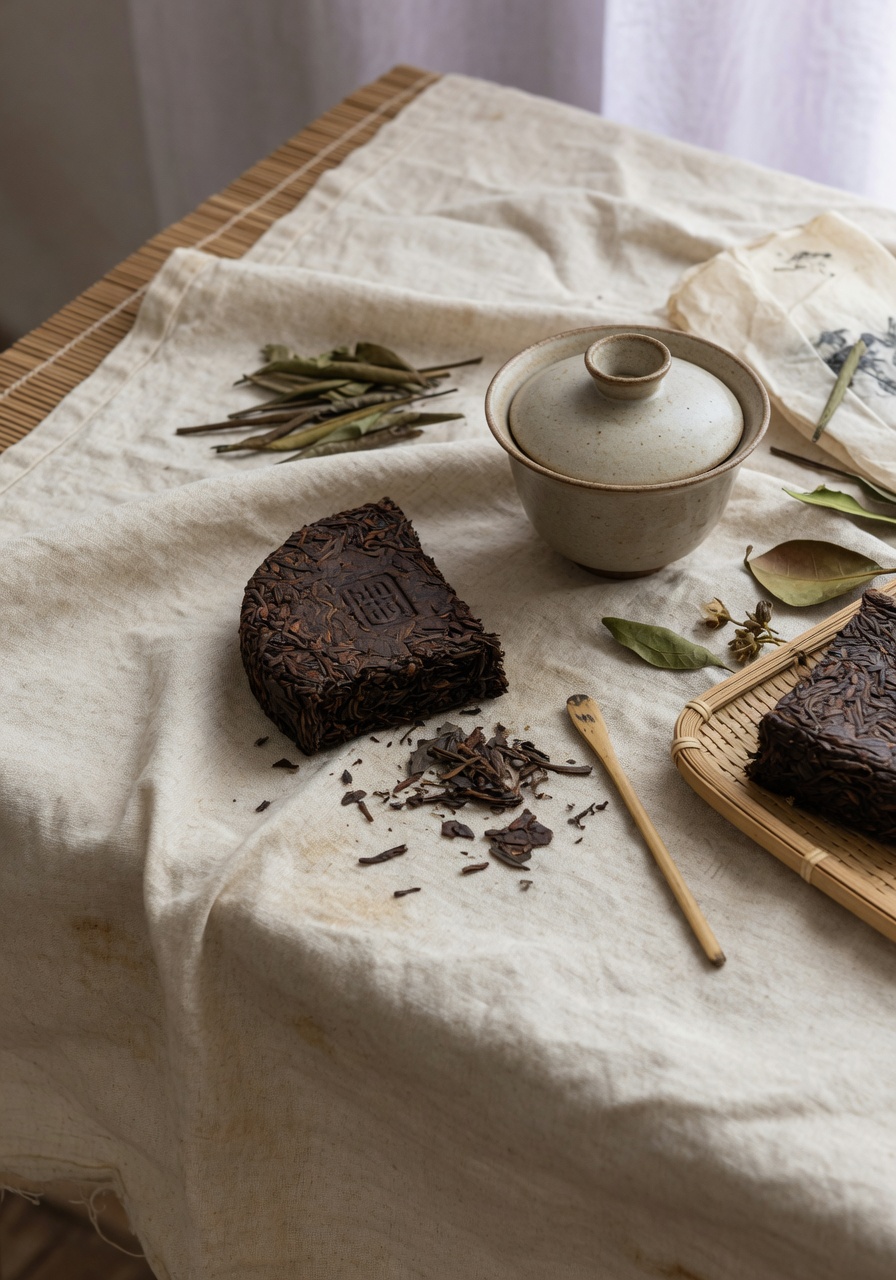
Menghai county — birthplace of modern shu
A flat-bottomed valley at 1,200 m, ringed by Bulang and Nannuo mountains, where in 1973 a state factory perfected pile fermentation and changed pu-erh forever.
Yiwu — forest gardens of the Laos border
On the southern edge of Xishuangbanna, where the forest crosses into Laos, *Yì Wǔ* (易武) grows the softest, most aromatic *shēng* in Yunnan — a tea that built an empire, vanished for fifty years, and rebuilt itself from village memory.