home · Brewing pu'er — <em>method follows the leaf</em>
Brewing
Brewing aged sheng — patience over precision
Lǎo Shēng Chá · 老生茶
A fifteen-year-old cake does not ask for a thermometer. It asks for hot water, a small pot, and the willingness to wait through three rinses before the leaf decides to speak.
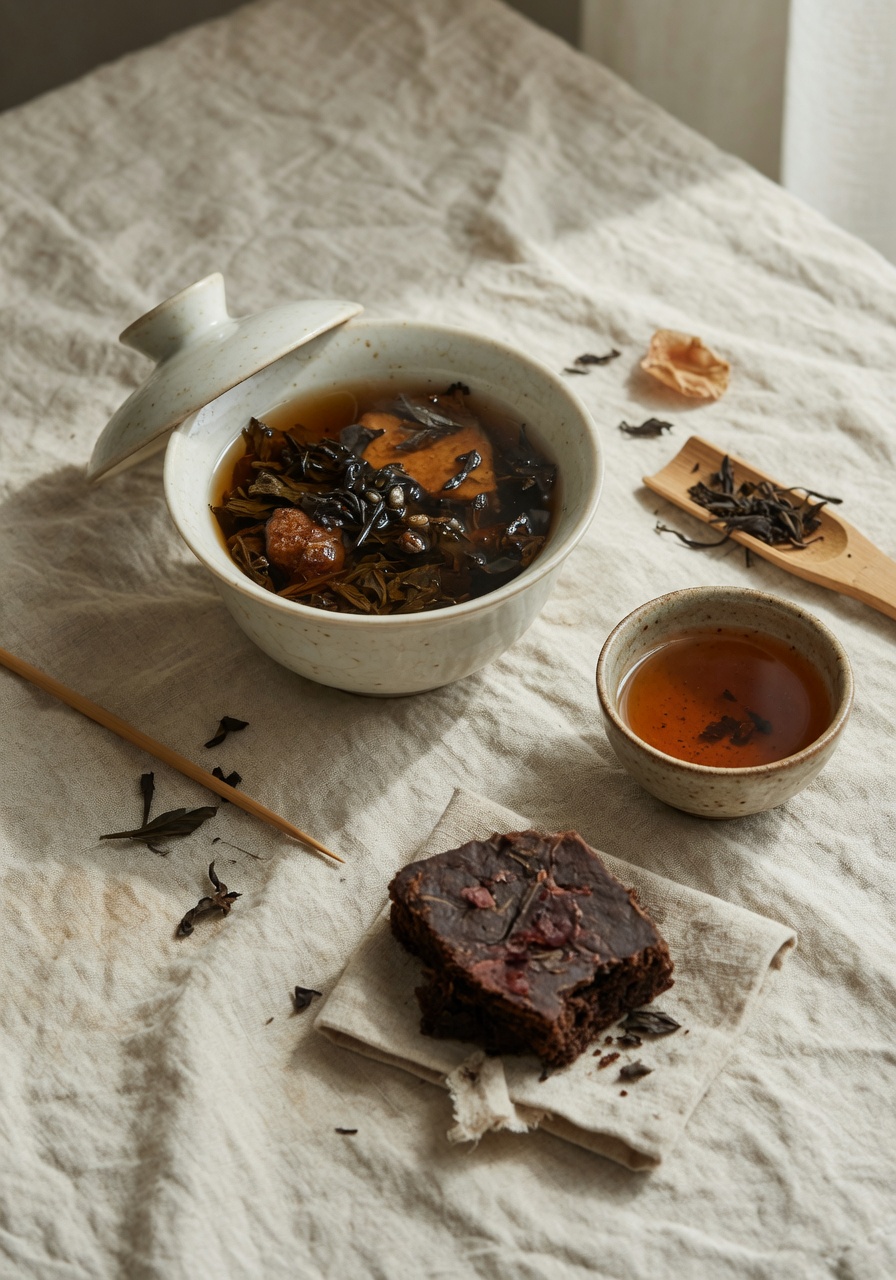
Brewing aged shēng (生) — by which most drinkers mean a sheng pu’er with fifteen years or more of dry, ventilated storage — sits awkwardly inside the gongfu literature. Most brewing guides were written for young leaf, where a few degrees of water temperature or a five-second pour shift can swing the cup from floral to astringent. Aged sheng resists that kind of micrometric control. The compounds that defined the young tea — epigallocatechin gallate, free amino acids, volatile linalool derivatives — have largely converted, polymerised, or dissipated. What remains is a more forgiving, more architectural tea: thearubigins and theabrownins giving body, slow-releasing wood and camphor notes, and a stored energy that needs heat and time to unlock. After twenty years working with caravan-route dark teas across the Russia–Mongolia corridor and tracking storage outcomes from Kunming to Ulaanbaatar, I have come to think of aged sheng as closer in spirit to a well-aged Liù Bǎo (六堡) than to a fresh Yiwu maocha. The brewing method should follow that intuition. This article walks through vessel choice, the rinse sequence, water temperature in real numbers, and the question of when — if ever — to boil. It assumes you already understand the difference between shēng and shú (熟); if not, start with our companion piece on sheng vs shu before continuing.
What aging actually changes in the cup
The chemistry literature on pu’er aging is still thin compared to wine, but the consensus from the Yunnan Agricultural University group around Professor Zhou Hongjie is consistent: total catechins fall by 60–80% over twenty years of dry storage, while theabrownin content roughly doubles between years five and fifteen before plateauing. Caffeine stays remarkably stable. What this means at the brewing bench is concrete. Young sheng punishes over-extraction — push 95°C water through 6 grams of three-year Bulang for forty seconds and you get a green, mouth-drying liquor. The same leaf at age eighteen, brewed identically, gives almost no astringency at all. The bitterness compounds simply are not there in the same quantities. This is why aged sheng tolerates — and in fact requires — longer steeps, fuller boils, and a denser leaf-to-water ratio than its younger self. The risk is no longer over-extraction. The risk is under-extraction: a thin, hollow cup that tastes of old paper and nothing else, leaving the drinker wondering what the fuss was about. Most disappointing sessions with aged sheng are not the tea’s fault. They are a brewer applying young-sheng caution to a leaf that needs persuasion.
Vessel — why I keep returning to clay
For young sheng I happily brew in porcelain gàiwǎn (盖碗) because I want to see the liquor and read the leaf precisely. For aged sheng the calculation reverses. The tea benefits from heat retention, from a vessel that holds 95°C+ through a three-minute steep without sinking to 80°C halfway. Zǐshā (紫砂) clay from Yixing, ideally a zhūní or qīngshuǐ ní pot of 120–180 ml, does this work better than any porcelain I have tried. The unglazed interior also absorbs and re-radiates the heavier aromatic compounds — the woodier, more medicinal end of the spectrum that defines a well-aged leaf. The trade-off is well known: a clay pot dedicated to aged sheng cannot be cross-used for young leaf or for shu without muddying both. I keep three pots in rotation — one for pre-2005 sheng, one for 2005–2015, one for shu — and the difference between using the dedicated pot and a generic gaiwan is, on most sessions, the difference between a five-infusion tea and an eleven-infusion tea.
Pot size and leaf ratio
For two drinkers I use a 150 ml pot with 8 grams of leaf — a ratio of roughly 1:19. This is denser than the 1:25 most guides recommend for young sheng. The reason is mechanical: aged sheng leaves, especially from tightly compressed cakes that have not been broken up well, release their compounds slowly across the first four or five infusions. A denser packing means the early steeps already give a coloured, structured cup rather than a pale warmup. If the cake is loose-pressed — many Yiwu cakes from the early 2000s are — drop to 7 grams. If it is iron-pressed (tiě bǐng, 铁饼), like the famous 7581 bricks, push to 9 grams and break the chunk a day in advance so air can re-enter the leaf.
When porcelain still wins
There is one case where I will reach for a thin-walled porcelain gaiwan over clay: when I am evaluating an unfamiliar cake for the first time. Clay rounds edges, hides faults, integrates aromatics. If I want to know whether a storage environment has gone slightly off — a faint sourness from too-humid storage, a flatness from being sealed in plastic — porcelain tells me honestly within two infusions. Once the tea passes that test, the clay pot comes out for the real session.
Water — fully boiling, every time
Aged sheng is the one category in the pu’er world where I do not hesitate on temperature. 100°C, off a rolling boil, into a pre-warmed pot. The conventional 85–90°C suggestion that appears in too many English-language guides is a mistranslation of advice meant for young, high-grade sheng with fresh buds that scorch easily. An aged cake has none of that delicacy left. The leaves have been through years of slow oxidation; the cell walls have softened; the volatile compounds that might be driven off by boiling water are already gone. What remains needs heat to dissolve. Water source matters more than people admit. Bottled spring water with a total dissolved solids reading of 50–120 ppm gives the best results in my testing — Nongfu Spring or Volvic both work. Hard tap water above 200 ppm flattens the cup. Reverse osmosis water below 30 ppm strips the body entirely and leaves a strange, hollow sweetness. If you cannot access a TDS meter, a simple rule: the water should taste pleasant to drink on its own. If it does not, the tea will not save it.
The rinse sequence
For aged sheng I rinse twice, not once. This is the single most important departure from young-sheng practice. The first rinse — about ten seconds, immediately discarded — wakes the leaf and washes off any storage dust. The second rinse, also discarded, is longer — twenty to thirty seconds with the lid on — and serves to fully rehydrate the compressed leaf. Then I let the pot rest for thirty seconds before the first drinking infusion. If you skip the second rinse on a tightly compressed cake, the first three drinking infusions will be progressively stronger as the leaf finally opens, and you will never quite catch up to the tea’s rhythm. With the double rinse, the first infusion already presents at full strength.
Timing across the session
My standard ladder for a fifteen-year cake in a 150 ml pot: infusion one, twelve seconds; two, ten; three, twelve; four, fifteen; five, twenty; six, thirty; seven, forty-five; eight, sixty; then doubling. By infusion ten the steeps are running two to three minutes. A good aged cake will continue to give meaningful liquor through fifteen infusions. After that I move the spent leaf to a small shā guō (砂锅) ceramic pot and simmer it on low heat for ten minutes for two final cups — the zhǔ chá (煮茶) finish that draws out the last of the polysaccharides and gives a soft, sweet, slightly soupy ending to the session.
Boiling — when and how
The question of whether to boil aged sheng from the start, rather than only at the end, divides experienced drinkers. The Hong Kong storage tradition, where high humidity accelerates fermentation, often favours full boiling of cakes thirty years and older — the leaves have effectively become a dark tea and behave like one. The Kunming and Taiwan dry-storage schools tend to gongfu-brew the same cakes and reserve boiling for the spent leaf. Both are defensible. My own practice for cakes between fifteen and thirty years: gongfu first, then simmer. For cakes over forty years, or for any cake stored in traditional Hong Kong conditions, I boil from the start in a 600 ml clay or silver kettle, four grams of leaf, water just under a rolling boil maintained for eight minutes, then pour through a strainer. The result is closer to a dark broth than a tea — but a broth with depth, with a returning sweetness called huí gān (回甘) that lingers for half an hour. This style is what the Mongolian caravan drinkers I worked with in Ulan-Ude would recognise. They never bothered with gaiwans. They boiled, they added a little milk and salt, and they drank tea that was thirty years old as if it were yesterday’s bread.
Reading the leaf at session’s end
Open the pot when you are finished. The spent leaves of a well-aged sheng should be supple, dark brown to nearly black, intact enough that you can identify individual leaves and stems. If they are brittle, cracked into small fragments, or uniformly black with no variation, the cake was either over-fermented (wet storage gone too far) or the leaf grade was lower than the wrapper claimed. If they are still olive-green and stiff, the storage was too dry or too short — this is a young sheng dressed in old paper. The colour should sit between dark chestnut and tobacco. The smell, hot and wet, should be of damp forest floor and old wood, never of mould or fish. This forensic step at the end of a session is where most of my learning about specific storage environments has come from, and it pairs naturally with the regional context covered on tea.school and the producer profiles at thetea.app.
A note on what cannot be brewed
Not every aged cake is worth the ceremony described above. A poorly stored cake — one that sat in a damp basement in coastal Guangdong without ventilation, or one that was sealed in food-grade plastic for a decade and turned anaerobic — will not give a good cup no matter how careful the brewer. The earliest signal is the dry leaf smell: a sharp, sour, almost vinegar-like note that no rinse can wash out. If you detect that on the first sniff, set the cake aside. No method recovers it. The honest brewer’s discipline is to recognise this within the first rinse and stop, rather than push through eight bad infusions hoping the next will be different. Patience over precision, yes — but patience aimed at a tea that deserves it.
References
- GB/T 22111-2008 — Geographical indication product: Pu'er tea — Standardization Administration of China
- Changes in chemical composition of Pu-erh tea during storage — Zhou Hongjie et al., Food Chemistry, 2011
- Pu-erh tea: botany, production, and chemistry — Yunnan Agricultural University Tea Research Institute, 2015 monograph
- Storage humidity effects on theabrownin formation in aged sheng — Journal of Tea Science (Chinese), vol. 38 issue 4, 2018
- Field interviews — caravan-route tea drinkers, Ulan-Ude and Kyakhta, 2014–2019 — Amgalan Chin, unpublished notes
Read next
Related articles
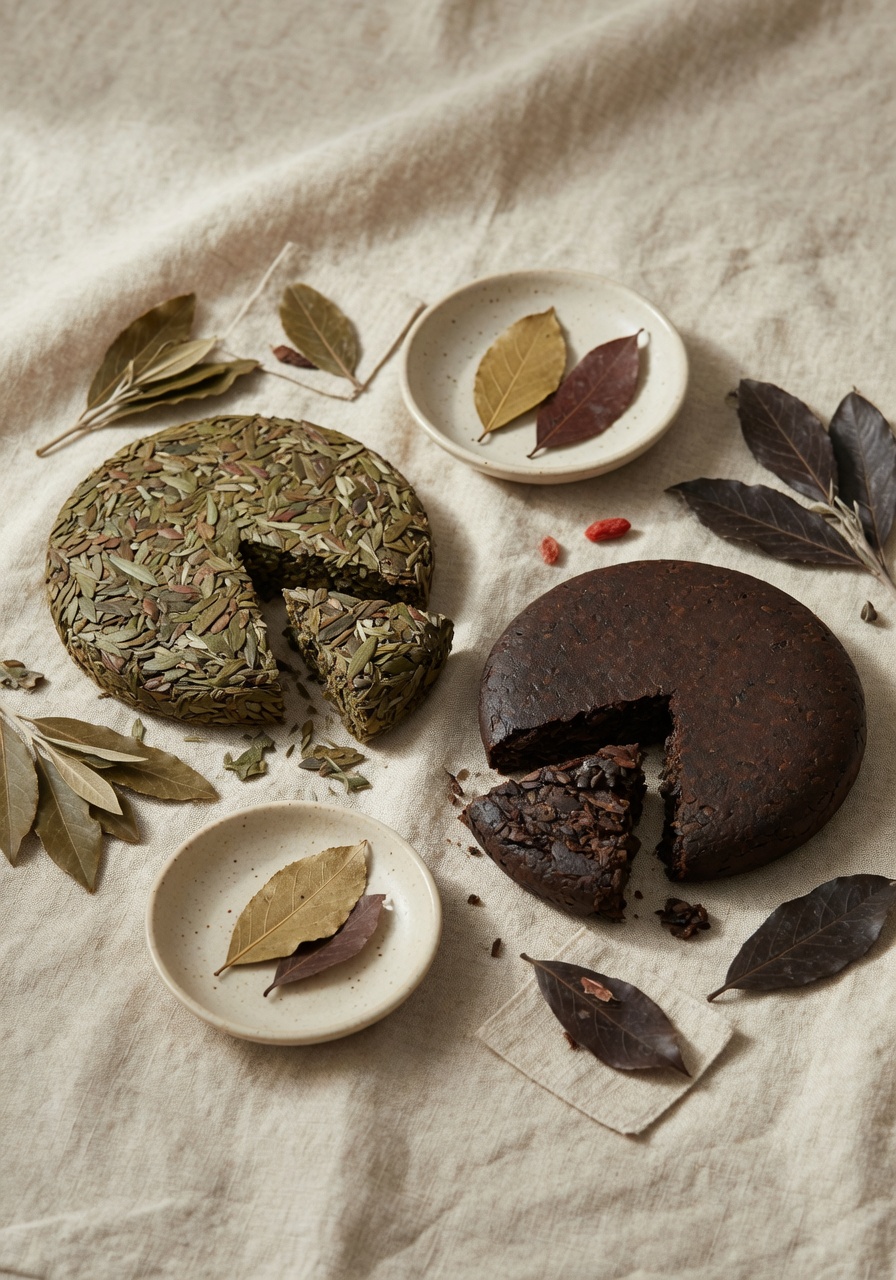
Sheng vs shu — what actually changes
Two teas share a name, a region, and a leaf — and almost nothing else. The 1973 invention of *wò duī* (渥堆) split pu'er into raw and ripe, and the chemistry of that split still defines every cake pressed today.
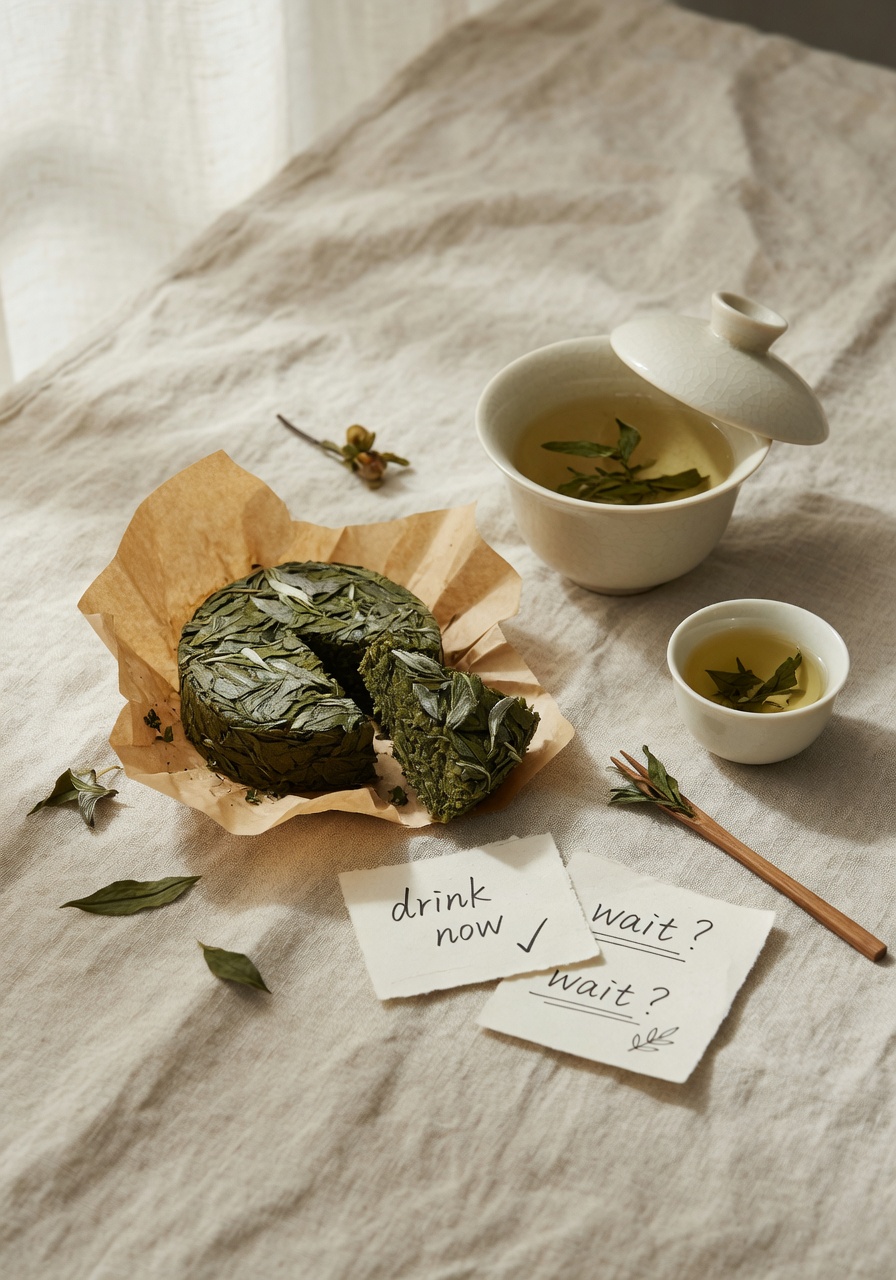
Young sheng — drink now or wait?
The question every collector asks within their first year. Some cakes are radiant at eighteen months; others need a decade before they stop biting. Here is how to tell which is which.
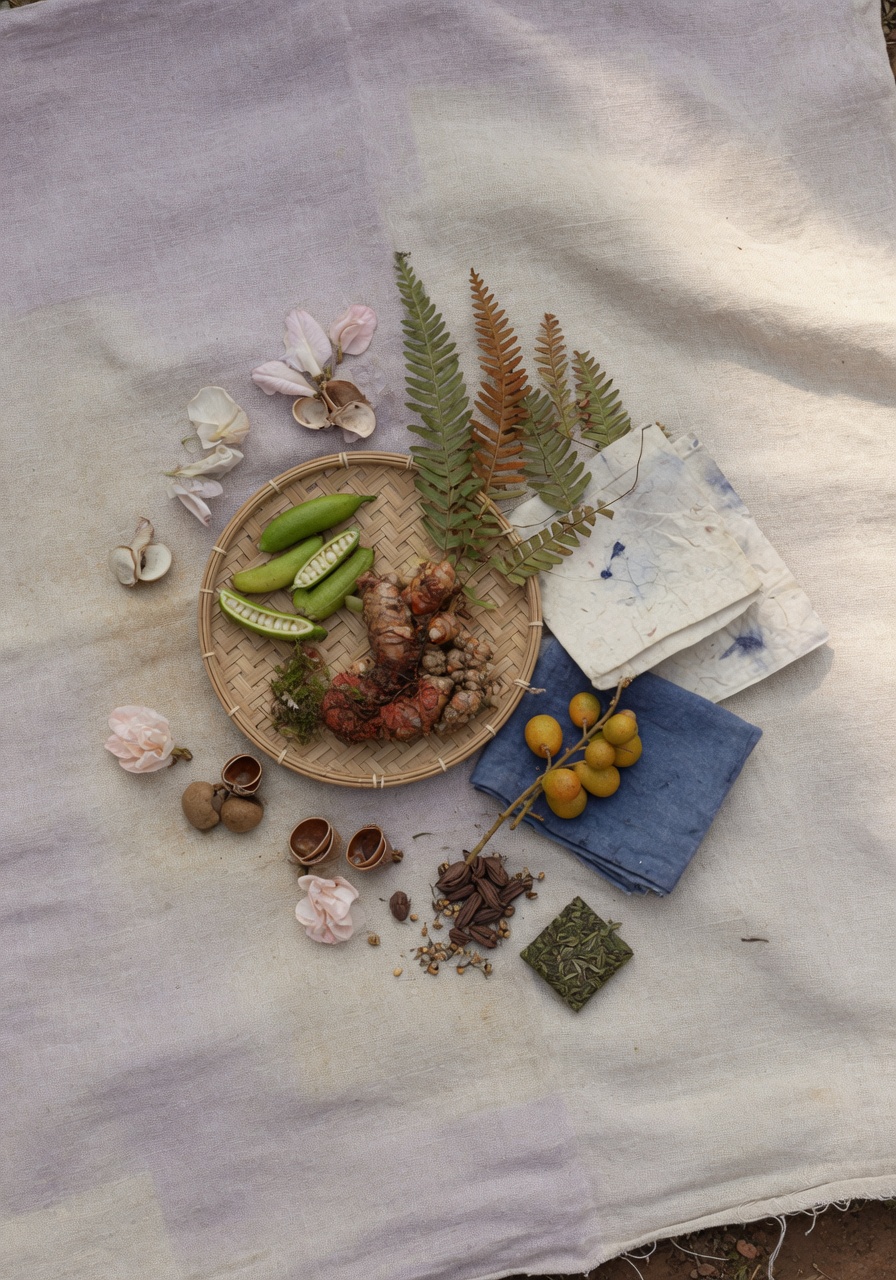
Yiwu — forest gardens of the Laos border
On the southern edge of Xishuangbanna, where the forest crosses into Laos, *Yì Wǔ* (易武) grows the softest, most aromatic *shēng* in Yunnan — a tea that built an empire, vanished for fifty years, and rebuilt itself from village memory.
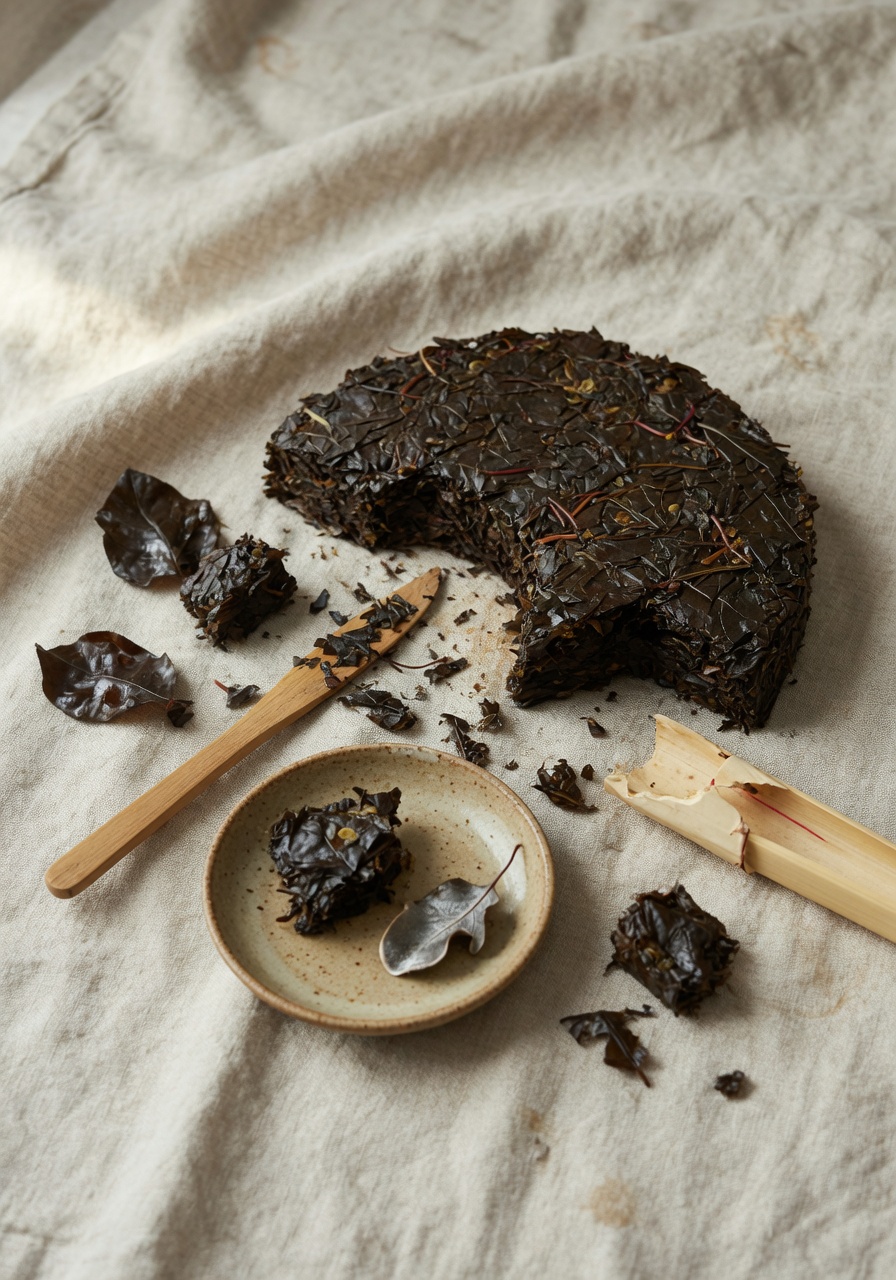
Menghai 7572 — the recipe that anchors the category
A four-digit code stamped on a paper wrapper has done more to define what shu tastes like than any single mountain or master. This is how 7572 became the reference point.