home · Six mountains, six <em>flavours</em> — terroir in pu-erh
Yunnan regions
Lincang — the western mountains, often overlooked
Lín Cāng · 临沧
West of the Lancang river, Lincang produces more raw material than any other Yunnan prefecture — yet its name rarely sits on the wrapper. The mountains that built Xiaguan and fed Menghai deserve a closer look.
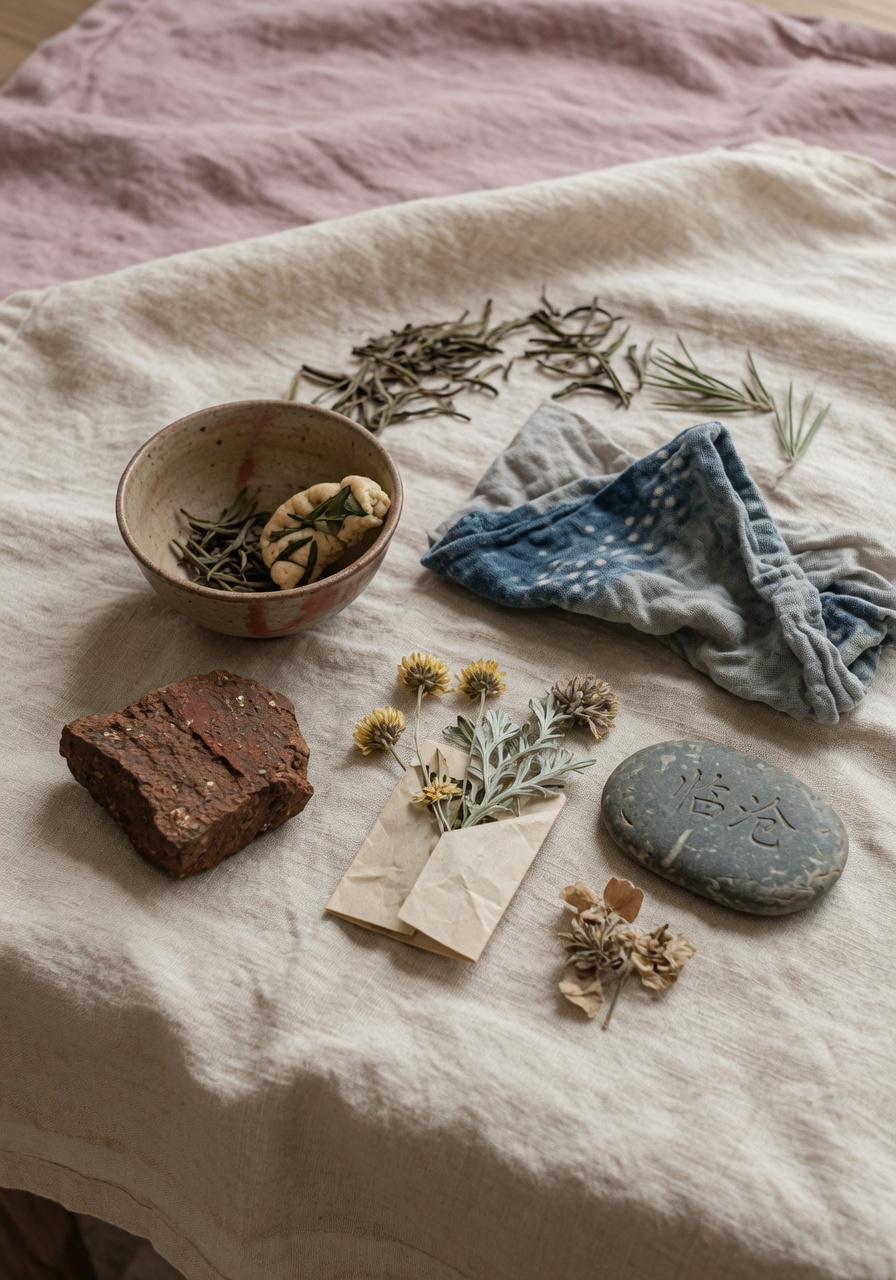
Ask a casual drinker to name a pu-erh region and you will hear Yiwu, Bulang, maybe Menghai. Ask the people who actually press cakes — the buyers from Xiaguan, the blenders at Menghai Tea Factory, the boutique producers quietly building cellars in Kunming — and Lincang (Lín Cāng 临沧) will come up before the kettle is cool. The prefecture sits on the western bank of the Lancang river (the upper Mekong), bordered by Myanmar to the southwest, and for decades it has been Yunnan’s largest producer of pu-erh raw material by volume. According to the Lincang Municipal Bureau of Agriculture, the prefecture managed roughly 1.7 million mu of tea gardens (around 113,000 hectares) in 2022, more than Pu’er city and Xishuangbanna combined.
And yet Lincang has a reputation problem. For most of the twentieth century its leaf was sold as máochá (毛茶) into the big state factories — pressed into 7581 bricks at Kunming, into 8653 cakes at Xiaguan, into countless anonymous recipes — and the prefecture name almost never appeared on the wrapper. When the gǔshù (古树) boom hit in the mid-2000s and put Yiwu and Bulang on the map, Lincang got there late. Even now, the region’s most famous village — Bīngdǎo (冰岛) on Mengku mountain — is more often counterfeited than understood. This article is an attempt to take the western mountains seriously: the geography, the cultivars, the villages that matter, and why Lincang leaf behaves the way it does in the cup and in the cellar.
Where Lincang sits, and why that matters
Lincang prefecture covers about 24,000 km² in southwestern Yunnan, stretching from roughly 23° to 25° north latitude and rising from the Lancang river valley (around 800 m) to peaks above 3,400 m. The pu-erh-relevant zone runs from about 1,500 m to 2,200 m, on the eastern and western flanks of the Bangma and Mengku ranges. Compared with Xishuangbanna to the southeast, Lincang is cooler, drier, and higher on average — the latitude is two degrees north of Yiwu, and the elevation of the best villages is two to three hundred metres above Bulang Shan. That difference shows up in the leaf: thicker cell walls, more bud hairs, slower spring flush.
The other thing that matters about Lincang’s geography is the river. The Lancang/Mekong cuts a deep north-south gorge through the prefecture, and most of the famous tea mountains are oriented as ridges running roughly perpendicular to it. Fengqing county sits in the north, Yun county and Linxiang district in the middle, and Shuangjiang (双江) — home to both Mengku and Bangma — in the south. Each of these has its own micro-climate, but they share one thing: a dry-cool winter and a long, slow spring flush that pushes the first picking into late March or early April, usually a week or two behind Menghai. Amgalan Chin notes from sourcing trips between 2017 and 2023 that ‘Lincang spring tea arrives at the Kunming wholesale market noticeably later than Banna leaf — and the buyers who know wait for it.‘
The cultivar question — Mengku Da Ye and its cousins
Lincang is the homeland of one of the most important cultivar populations in Yunnan: Měngkù dà yè zhǒng (勐库大叶种), Mengku large-leaf varietal. Recognised as a state-level improved cultivar by China’s National Crop Variety Approval Committee in 1985, Mengku Da Ye is a sister population to Menghai Da Ye and Fengqing Da Ye, and together they form the genetic backbone of modern pu-erh. Mengku leaf tends to be slightly more elongated, with denser white pekoe on the bud and a polyphenol content that runs, in the published surveys from the Yunnan Academy of Agricultural Sciences, between 32 % and 36 % of dry weight — on the high end for Yunnan da-ye.
What does that mean in the cup? More bitterness in youth, and more aromatic depth at age. The classic Lincang profile — and you’ll see this repeated in tasting notes from buyers and from cellars in Guangzhou — is a tea that hits the front of the palate hard, with a clean astringency that resolves quickly into sweetness (huí gān 回甘) and a long, cool throat-feel (hóu yùn 喉韵). It is, in other words, the opposite of the soft forest sweetness of Yiwu.
Mengku Da Ye vs Bingdao native varietal
Within Mengku itself there is a further distinction worth knowing. The truly old trees in Bingdao village — and there are perhaps only a few hundred of them above 200 years — are a local population sometimes called Bīngdǎo zhǒng (冰岛种), morphologically related to Mengku Da Ye but with a smaller leaf, a thinner waxy cuticle, and a distinctive sweet-floral character that the surrounding villages do not produce. Whether this is a true sub-cultivar or simply phenotypic variation under specific soil conditions is still debated; Yang Shiyong’s 2019 survey for the Yunnan Tea Research Institute leans toward the latter. Practically, however, it means that ‘Bingdao’ as a flavour profile cannot be reproduced by planting Mengku Da Ye seedlings on a nearby slope, which is part of why the village has become so heavily counterfeited.
The villages that matter
Lincang is not a single terroir. The prefecture contains at least a dozen tea-producing zones with meaningfully different profiles, and a serious drinker should learn to distinguish them. Below are the four that come up most often in collector conversation — but the catalog on puerh.app lists more.
Bingdao (冰岛) — Mengku’s crown
Bingdao village sits at around 1,400-1,700 m on the western slope of Mengku mountain, in Shuangjiang county. Old-tree spring leaf from the five traditional Bingdao hamlets (Lǎozhài 老寨, Nánpō 南迫, Dìjiē 地界, Nuòwū 糯伍, Bàwāi 坝歪) has, since around 2010, become the most expensive raw material in all of Yunnan — quoted prices for 2023 spring Laozhai gushu maocha ran 30,000-50,000 RMB per kilogram, and that’s before pressing. The character is unmistakable: a high cool sweetness on the nose, almost like sugar cane, a body that is light but unusually long, and a huí gān that arrives within three or four seconds of swallowing. The problem is that perhaps 95 % of cakes labelled ‘Bingdao’ on the market are not from the five villages. Buy from sources you can trace.
Xigui (昔归) — the low-altitude exception
If Bingdao is the high cool one, Xigui (昔归) is the dense low one. The village sits on the Lancang riverbank at only about 750 m — almost shockingly low for a famous pu-erh terroir — in Linxiang district. The trees grow on rocky soil among scrub, and the leaf produces a tea with a strong, almost mineral body, a deep yùn that sinks toward the back of the throat, and a marine-like aromatic note that veteran tasters describe with the word xián (鲜), savoury-fresh. Xigui drinks like nothing else in Lincang and ages along a slower, denser curve than Bingdao.
Da Xue Shan (大雪山) — the wild high ground
Mengku Da Xue Shan, ‘great snow mountain,’ rises to 3,200 m above Shuangjiang. On its eastern flank, between roughly 2,200 and 2,750 m, sits one of the most significant wild Camellia populations in Yunnan — a stand of large-leaf trees documented by the Yunnan Forestry Department in 1997, with the oldest specimen estimated at over a thousand years. The leaf is bitter in youth, with a stony cold-throat quality, and it requires patience. Cakes from Da Xue Shan are not for the impatient drinker; ten years in a Kunming-condition cellar is a starting point, not an endpoint.
Fengqing (凤庆) — the black tea capital that also makes sheng
North of Mengku, Fengqing county is best known for Dianhong — the Yunnan black tea that Zhou Xiang has written about in the broader tea encyclopedia at thetea.app — but Fengqing also produces serious sheng pu-erh from old gardens around Xiāngzhúqìng (香竹箐), where a single tree dated by the Chinese Academy of Agricultural Sciences in 2004 is estimated at over 3,200 years old. Fengqing sheng tends to be rounder and less aggressive than Mengku — closer in feel to a softer Yiwu, but with the bone structure of a Lincang.
How Lincang leaf ages
There is a working hypothesis among long-term pu-erh storers in Guangzhou and Kunming that Lincang teas follow a different ageing curve than Banna teas. The argument runs roughly like this: the higher polyphenol content and thicker cell walls of Mengku-type leaf mean that fermentation proceeds more slowly in the first decade, but continues for longer overall, with the peak window often falling between fifteen and twenty-five years rather than the ten-to-fifteen window typical of softer Yiwu material. Whether this generalisation holds across all Lincang sub-regions is unclear — Xigui in particular seems to age on its own schedule — but the broader point is consistent with what we know about leaf chemistry.
Amgalan Chin, who has tracked the same six Lincang cakes through twelve years of storage between Ulaanbaatar (cool-dry) and a Kunming reference cellar, observes that ‘the Mengku material I pressed in 2011 only really started to show its second-phase aromatics — the dried-fruit, the camphor edge — around year nine in Kunming. In the Mongolian climate, it’s still in its first phase.’ Storage matters enormously here, and the storage guide on puerh.app goes into the temperature and humidity numbers in more detail. Drinkers used to the rapid early evolution of Bulang or Menghai material should expect Lincang cakes to demand more patience — and to repay it with more length.
Why the prefecture stayed in the background
If Lincang produces this much, and this well, why did it not become the public face of pu-erh? Three reasons. First, the state factory system. From the 1950s through the 1990s, Lincang máochá flowed mostly into Kunming Tea Factory and Xiaguan Tea Factory as blending stock — high-quality, but anonymous. The 7581 brick that defined a generation of shu drinkers in Hong Kong was built largely on Lincang leaf, and yet ‘Lincang’ never appeared on the paper. Second, infrastructure: until the Kunming-Lincang highway was completed in 2016, getting fresh máochá out of villages like Bingdao to the urban markets took twice as long as the equivalent trip from Menghai, and a lot of quality was lost in the gap. Third, branding: when the gǔshù boom arrived in the mid-2000s, the Banna producers — particularly the boutique Yiwu workshops — were faster to tell a clean village-by-village story to collectors. Lincang’s own producers, like Mengku Rongshi Tea Factory (founded 1999) and Bā Mǎ (巴马), came to that game several years later.
That is changing. Since roughly 2015, single-village Lincang cakes have become a substantial share of the boutique market, and buyers who once treated Lincang as a discount alternative to Banna now actively seek it out. The asymmetry between price and reputation is narrower than it used to be, but it has not closed entirely — which, for the curious drinker, is still an opportunity.
What to drink, and how
If you have never sat with a Lincang sheng, three starting points are worth considering. A young Mengku gushu from a reputable producer — not Bingdao itself, which is now mostly out of reach, but one of the surrounding villages like Bàwāi or Dìjiē — will show you the cool sweet upper register of the prefecture. A Xigui from any vintage will give you the dense end. And a ten-to-fifteen-year-old anonymous Lincang blend, which can still be found in Kunming and Guangzhou shops at reasonable prices, will give you a sense of how the material ages in the middle. Brew at 95-100 °C, in a porcelain gàiwǎn (盖碗) of around 110 ml, with a leaf-to-water ratio near 1:15 for a first session; Lincang material rewards short early infusions (5-8 seconds) and tolerates ten or more steeps without falling apart.
The most important thing, in the end, is to taste Lincang against Banna in the same session. Brew a Mengku cake and a Bulang cake side by side, two gàiwǎn, same water, same timer. The difference — the cool versus the warm, the bright front versus the deep middle, the cane versus the honey — is the entire argument for taking the western mountains seriously. The catalog at puerh.app and the broader regional tasting curriculum at tea.school both lean on this comparison; it is the fastest way to teach a palate what Yunnan terroir actually means.
References
- Yunnan Da Ye Zhong cultivar registration records — National Crop Variety Approval Committee, 1985
- Survey of polyphenol content in Yunnan large-leaf cultivars — Yunnan Academy of Agricultural Sciences, Tea Research Institute, 2018
- Lincang prefecture tea industry statistical bulletin — Lincang Municipal Bureau of Agriculture and Rural Affairs, 2022
- GB/T 22111-2008 — Geographical indication product: Pu-erh tea — Standardization Administration of China
- Field survey of ancient tea tree populations in Mengku Da Xue Shan — Yunnan Forestry Department, 1997
- Xiangzhuqing ancient tea tree dating report — Chinese Academy of Agricultural Sciences, 2004
- Sourcing notebook 2017-2023: Mengku, Xigui, Fengqing — Amgalan Chin, internal field notes
Read next
Related articles
Bulang Shan — the bitter that becomes sweet
On the southern edge of Menghai county, the Bulang people have tended tea for over a thousand years. Their leaf opens the throat with bitterness — then turns sweet, slowly, and refuses to leave.
Yiwu — forest gardens of the Laos border
On the southern edge of Xishuangbanna, where the forest crosses into Laos, *Yì Wǔ* (易武) grows the softest, most aromatic *shēng* in Yunnan — a tea that built an empire, vanished for fifty years, and rebuilt itself from village memory.
Menghai county — birthplace of modern shu
A flat-bottomed valley at 1,200 m, ringed by Bulang and Nannuo mountains, where in 1973 a state factory perfected pile fermentation and changed pu-erh forever.
Gushu / 'old tree' tea — what's real, what's marketing
The term *gǔshù* (古树) sells more cake than any other two characters in Yunnan. Most of what's labelled gushu is not. Here's how to read the claim — botanically, contractually, and in the cup.